
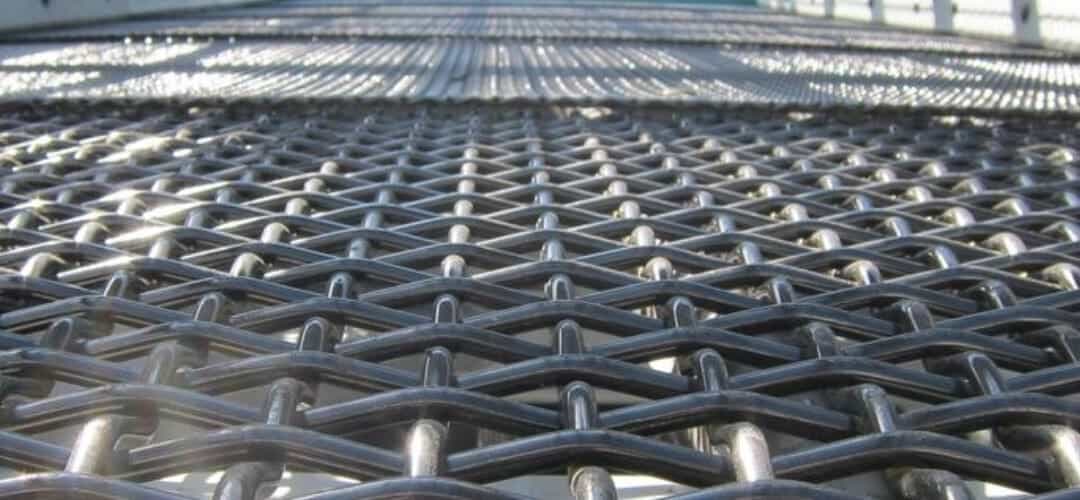
Ask ten engineers which woven wire is the strongest and you will get ten answers that start the same way. It depends on the job. Strength in woven wire mesh comes from three things working together: the material, the wire diameter and the weave pattern. Get the mix right and woven wire will outlast almost any alternative, including welded mesh.
This guide explains which weaves and materials give the most strength, and why we recommend woven wire over welded for most demanding jobs.
What Makes Woven Wire Strong
Before comparing weaves, it helps to know what drives strength in the first place.
- Material: The grade of steel sets the baseline for tensile strength, wear resistance and corrosion resistance.
- Wire Diameter: Thicker wire carries more load and wears for longer, though it reduces the open area.
- Weave Pattern: The way the wires lock together decides how well the mesh holds its shape under impact, vibration and tension.
A heavy wire in the wrong weave can still fail early. The weave is where most of the difference lies.
The Strongest Weave Patterns
Lock Crimp
Lock crimp mesh is the workhorse of heavy screening. Each wire is pre-crimped with a sharp bend that locks the crossing wires firmly in place. The apertures stay true even under heavy impact and constant vibration. This is why lock crimp is the standard choice for woven screening mesh in quarrying and mining.
Flat Top
Flat top mesh puts all the crimps on the underside, leaving a smooth upper face. Material slides across the surface instead of hitting raised knuckles. That cuts wear on the top of the wire and keeps apertures open for longer, making it a strong option for abrasive materials.
Dutch Weave
For filter mesh, Dutch weave is the strongest pattern. Thicker wires run one way, with finer wires packed tightly the other. Twilled Dutch weave goes further still, giving a dense, rigid cloth that handles high pressure without distorting.
Plain and Twill Weave
Plain weave is simple and versatile, and it is the basis of most fine woven mesh. Twill weave passes each wire over and under two others, which allows heavier wire at a given aperture. Both are strong in the right setting, but neither matches lock crimp for impact.
| Weave | Key Strength | Common Use |
|---|---|---|
| Lock Crimp | Holds aperture under heavy impact | Quarrying and mining screens |
| Flat Top | Resists surface wear | Abrasive screening |
| Dutch Weave | Dense and pressure resistant | Filtration |
| Twill Weave | Takes heavier wire | Industrial sieving |
The Strongest Materials
High-tensile steel gives the best wear life in dry, abrasive screening. Manganese steel adds extra hardness where rock hits the mesh hard. Stainless steel mesh in 316 grade suits wet, corrosive or food-safe settings, with 304 grade a cost-effective choice for less aggressive conditions.
So the strongest woven wire for most heavy-duty work is a lock crimp or flat top mesh in high-tensile or manganese steel. For filtration, twilled Dutch weave in stainless steel takes the lead.
Why Woven Wire Beats Welded Mesh
Welded wire mesh has its place, but for most demanding jobs woven wire performs better and lasts longer. Here is why.
No Weak Points at the Joints
Welded mesh is only as strong as its welds. Every joint is a spot where heat has changed the steel, and that is often where cracks start. Woven wire has no welds. The wires lock together mechanically, so there is no single point waiting to fail.
It Flexes Under Load
Woven wire gives slightly under impact and spreads the force across the mesh. Welded mesh is rigid, so shock loads go straight into the joints. On a vibrating screen deck, that flex is the difference between a mesh that lasts and one that snaps.
Better Corrosion Resistance at the Joints
Welding can burn off protective coatings and leave heat-affected zones where rust takes hold. Woven wire keeps its material and finish intact at every crossing point.
It Can Be Tensioned
Woven screens can be pulled tight across a frame. Correct tension reduces whipping and wear, which extends the life of your screening media.
A Wider Choice of Specifications
Woven wire comes in a far broader range of apertures, wire sizes and weaves, from coarse screening mesh to fine filter cloth. Welded mesh has a much narrower range, especially at fine apertures.
It Forms Without Failing
Woven mesh can be rolled, bent and shaped for enclosures, woven wire balustrade infill and mesh cladding without joints breaking. Welded panels are more prone to cracking at the welds when formed.
When Welded Mesh Still Makes Sense
Welded mesh is cheaper and stays rigid in flat panels. For fencing, basic guarding and concrete reinforcement, it does the job well. Where there is impact, vibration, abrasion or corrosion, woven wire is the stronger long-term buy.
Choosing the Strongest Woven Wire for Your Project
Start with the job, not the product. Match the weave to the load, the material to the environment and the wire diameter to the wear you expect. At Graepels we help specifiers balance strength against open area so the mesh performs from day one. Speak to our team about your application.
