
Woven wire and welded wire can look similar from a distance. Both are grids of steel wire with regular openings. The difference lies in how the wires are joined, and that one detail affects strength, flexibility, aperture range and where each mesh works best.
This guide explains how each type is made, how they compare and which to choose for your project.
How Woven Wire Is Made
Woven wire mesh is made on a loom, in much the same way as fabric. Wires running lengthways pass over and under wires running across. On heavier meshes, the wires are crimped first so they lock into each other.
There are no welds. The wires hold each other in place mechanically, which gives the mesh strength while still allowing a small amount of movement.
How Welded Wire Is Made
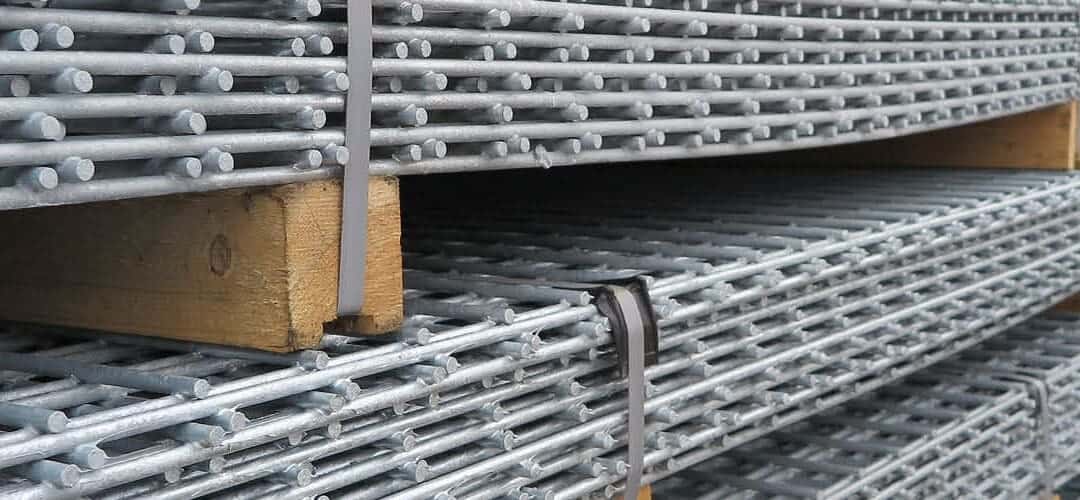
Welded wire mesh starts with straight wires laid in a grid. An electric current fuses the wires together at every crossing point. The result is a flat, rigid panel or roll with square or rectangular openings.
Woven vs Welded at a Glance
| Feature | Woven Wire | Welded Wire |
|---|---|---|
| Joints | Interlocked, no welds | Welded at every crossing |
| Behaviour Under Load | Flexes and spreads impact | Rigid, with load going into the welds |
| Aperture Range | Very wide, from coarse to fine | Mostly medium to large |
| Wire Grades | Any, including high-tensile | Mostly mild, galvanised or stainless |
| Forming | Rolls and bends well | Welds can crack when formed |
| Cost | Usually higher | Usually lower |
Strength and Durability
Welded mesh is only as strong as its welds. Each joint is a point where heat has changed the steel, and that is where cracks tend to start under vibration or repeated impact.
Woven wire has no heat-affected joints. When force hits the mesh, it spreads across many wires instead of concentrating at a weld. This is why woven wire is the standard for screening mesh on vibrating decks in quarrying and mining, where welded mesh would fail early.
Aperture and Wire Choice
Woven wire offers a far broader range of specifications. Apertures run from large screening openings down to fine woven mesh and filter mesh with openings too small to see clearly. Different weaves, such as plain, twill, lock crimp and Dutch weave, add even more options.
Woven wire can also use high-tensile steel. High-carbon wire does not weld well, as the heat can undo its hardening. That limits welded mesh to softer grades, which wear faster in abrasive work.
Corrosion and Finish
Welding can burn off protective coatings at each joint, leaving small areas open to rust. Galvanising after welding helps, but adds cost. Woven wire keeps its material and finish intact at every crossing point.
For wet, marine or food-safe settings, stainless steel mesh is available in both types. Woven stainless is often the better choice where fine apertures or a clean finish are needed.
Forming and Fabrication
Woven mesh can be rolled, bent and shaped without failing. That makes it well suited to curved enclosures, woven wire balustrade infill and mesh cladding, where appearance matters as much as strength.
Welded mesh is best kept flat. Bending it puts stress on the welds, which can crack or break.
Cost
Welded mesh is usually cheaper to produce, especially in standard panel sizes. Woven wire costs more upfront, but its longer service life often makes it better value in demanding applications.
Which Should You Choose?
Choose Woven Wire For
- Screening: Vibration, impact and abrasion in aggregates, mining and recycling.
- Filtration and Sieving: Fine, accurate apertures.
- Architecture and Interiors: Balustrades, cladding, partitions and feature screens.
- High-Tensile Needs: Any job where wear life matters most.
Choose Welded Wire For
- Fencing and Guarding: Rigid barriers at a lower cost.
- Enclosures and Shelving: Flat panels that hold their shape.
- Reinforcement: Concrete and general construction work.
Welded wire does a good job where a simple, rigid panel is all you need. Where the mesh has to flex, wear, shape or filter, woven wire is the stronger long-term choice.
Getting the Right Mesh for the Job
At Graepels we manufacture both woven and welded wire mesh, so we can recommend the right type without bias towards one product. Speak to our team about your application and we will help you choose the material, aperture and construction.
